Contents
- 1 Information
- 2 Why Dogs Lick Their Paws More at Night
- 3 Common Causes of Nighttime Paw Licking
- 4 Environmental Allergies (Very Common)
- 5 Food Allergies
- 6 Dry Skin & Winter Irritation
- 7 Anxiety, Stress & Nighttime Habits
- 8 Pain or Hidden Injuries
- 9 Parasites (Fleas & Mites)
- 10 Yeast or Bacterial Infections
- 11 When to See a Veterinarian
- 12 How to Help at Home
- 13 Preventing Paw Licking Long-Term
- 14 Final Thoughts
Information
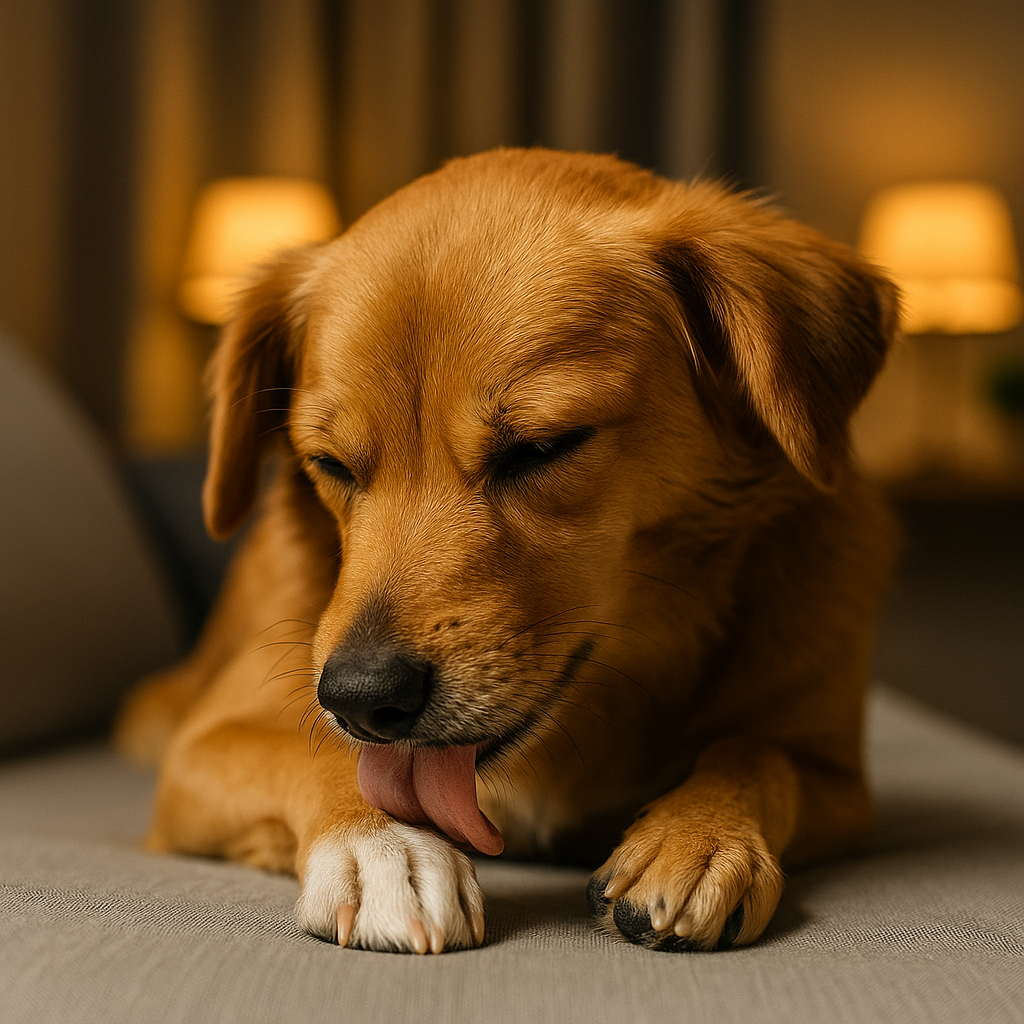
If you’re wondering why dogs lick their paws at night, you’re not alone. Many dog owners notice that their dog’s licking seems to get worse in the evening when the house becomes quiet. Occasional paw licking is normal, but persistent or intense nighttime licking usually means something is bothering your dog.
This guide explains the most common causes, how to help at home, and when to contact a veterinarian.
Why Dogs Lick Their Paws More at Night
During the day, dogs are distracted by activity — walks, playtime, noises, people, and stimulation. At night, when everything settles down, they become more aware of:
- irritation
- dryness
- allergies
- discomfort
- stress or anxiety
Nighttime licking often reveals an issue that your dog wasn’t focused on earlier.
If licking happens once in a while, it’s nothing to worry about.
But if your dog licks every night, chews their paws, or seems restless, it’s time to figure out the cause.
Common Causes of Nighttime Paw Licking
Dogs lick their paws for many reasons, but the most common include:
- environmental allergies
- food allergies
- dry skin
- winter salt or ice irritation
- anxiety or stress
- boredom
- injuries
- yeast or bacterial infections
- fleas or mites
Let’s go through each cause in detail.
Environmental Allergies (Very Common)
Environmental allergies are the #1 reason dogs lick their paws at night. These allergies can occur year-round, but they’re especially common in:
- spring: tree and grass pollen
- summer: grass and environmental allergens
- fall: mold spores
- winter: dry indoor air + irritation from salt/ice melt
Dogs are commonly allergic to:
- grass
- dust and dust mites
- pollen
- mold
- home cleaning products
- laundry detergents
- scented floor cleaners
Why is it worse at night?
Allergens stick to paws during the day. Once your dog lies down, the irritation becomes more noticeable.
According to the American Kennel Club, environmental allergies are one of the most common reasons dogs lick their paws, especially after exposure to grass, pollen, or dust.
Link: https://www.akc.org
Signs of environmental allergies
- red skin between toes
- constant licking at night
- pink or brown saliva stains
- itchy ears
- chewing instead of licking
- seasonal flare-ups
How to help
- wipe paws after walks
- reduce scented cleaners in the home
- wash bedding regularly
- use gentle, hypoallergenic dog shampoo
- keep floors clean and dry
Food Allergies
Food allergies can also cause nighttime paw licking. Dogs with food sensitivities often show:
- itchy paws
- recurrent ear infections
- belly rashes
- soft stools or gas
- face rubbing
Common food triggers
- chicken
- beef
- dairy
- wheat
- soy
- eggs
Why nighttime?
Digestive inflammation and histamine responses tend to increase while resting.
How to help
Food allergies require a vet-guided elimination diet or switching to foods such as:
- limited-ingredient recipes
- novel proteins (duck, lamb, salmon)
- hydrolyzed protein diets
Dry Skin & Winter Irritation
Cold climates like Canada and northern U.S. often cause:
- dry indoor air
- irritated paws from salt
- cracking of paw pads
- burning sensation from ice melt
Many dogs lick excessively after winter walks.
Signs of dry or irritated paws
- flaky or rough skin
- redness
- licking after walks
- small cracks
- limping or hesitation on cold ground
How to help
- rinse paws with warm water after walks
- use a dog-safe paw balm
- consider protective boots
- keep a humidifier running indoors
- trim fur between paw pads
Anxiety, Stress & Nighttime Habits
Not all paw licking is physical — many dogs lick to self-soothe.
Common emotional triggers
- nighttime separation
- boredom
- lack of mental stimulation
- changes in routine
- new environments
- pent-up energy
- licking mostly when alone
- whining before bed
- pacing at night
- licking multiple body parts
How to help
- increase daily exercise
- offer enrichment toys
- use a predictable nighttime routine
- create a calm sleeping environment
- provide mental stimulation (sniffing games, puzzle feeders)
Pain or Hidden Injuries
Dogs often lick a paw if something hurts. This includes:
- small cuts
- cracked nails
- torn dew claws
- insect bites
- splinters or debris
- arthritis (especially in older dogs)
- strained joints
Check for
- swelling
- redness
- heat in the joint
- favoring one paw
- sensitivity when touched
If pain is suspected, contact a veterinarian.
Parasites (Fleas & Mites)
Fleas often bite legs and feet, while mites can cause intense itching.
Signs of parasites
- red bumps
- scabs
- hair loss
- sudden severe scratching
- irritated skin between toes
Parasites require proper veterinary treatment — at-home remedies don’t work well for mites.
Yeast or Bacterial Infections
Moisture between paw pads can lead to yeast overgrowth.
VCA Animal Hospitals notes that yeast infections often develop between the paw pads due to moisture and irritation, leading many dogs to lick or chew their paws at night.
Link: https://vcahospitals.com
Yeast infection signs
- strong odor (corn chip smell)
- greasy texture
- brown or pink staining
- thickened skin
- intense chewing
Bacterial infections can follow scratching or irritation and need vet-prescribed medication.
When to See a Veterinarian
Contact your vet if your dog shows:
- bleeding or cracked paws
- foul odor
- swelling
- persistent limping
- sudden severe itching
- intense chewing
- signs of pain
- symptoms lasting more than 1–2 weeks
Any nighttime licking that becomes a daily habit is worth investigating.
How to Help at Home
Here are proven, safe steps to ease paw irritation:
1. Wipe paws after each walk
Use warm water or unscented wipes to remove pollen, salt, or debris.
2. Moisturize with paw balm
Protects the pads and helps heal dryness or cracks.
3. Trim fur between the toes
Reduces matting and prevents snowballs in winter.
4. Bathe with gentle shampoo
Use oatmeal, aloe, or anti-itch formulas.
5. Add a humidifier
Improves dry skin during winter months.
6. Increase mental stimulation
Sniff walks, slow feeders, puzzle toys, and enrichment reduce anxiety licking.
7. Consider dietary adjustments
If food allergies are suspected, ask your vet about an elimination diet.
8. Reduce scented household products
Switch to hypoallergenic detergents and cleaners.
Preventing Paw Licking Long-Term
Small daily habits prevent chronic irritation:
- maintain a weekly paw care routine
- clean paws after outdoor activities
- moisturize regularly in winter
- keep nails trimmed
- manage allergies proactively
- use protective boots in harsh weather
- monitor for changes or seasonal patterns
With consistency, nighttime licking almost always improves.
Final Thoughts
Nighttime paw licking is very common, but it often reflects an underlying cause that can be managed. With the right care — and by identifying what’s bothering your dog — most dogs find relief quickly.
This guide is part of the PawGuides health series, created to help dog owners understand everyday behaviors and make confident decisions about their dog’s well-being.
Learn more helpful dog care guides at our Home page.